
Smart Locket vs. Traditional Photo Locket: Which Makes the Better Keepsake?
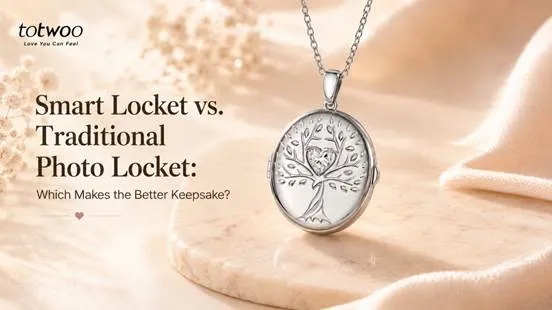
A smart locket and a traditional photo locket can both keep an important memory close, but they create very different ownership experiences.
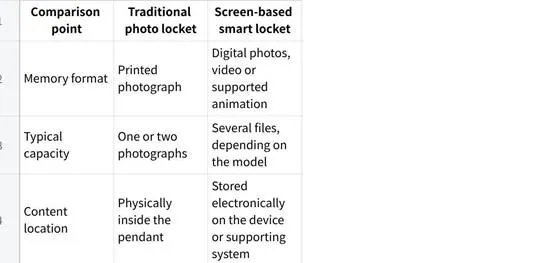
A traditional locket holds a printed photograph inside a piece of jewelry. It requires no account, app, battery or wireless connection. A screen-based smart locket displays digital photos, a short video or another supported format and may allow the content to be replaced through an app.
Neither is automatically more personal. The better keepsake depends on whether the recipient values permanence and simplicity or prefers multiple, updateable digital memories.
The Short Answer
Choose a traditional photo locket when the recipient wants:
• One or two permanent printed photographs
• No app, account or charging
• Greater independence from software and online services
• A classic piece that may be kept for decades
• Minimal maintenance
• A completely offline gift
Choose a smart locket when the recipient wants:
• Several photographs in one pendant
• A slideshow or short video
• Content that can be changed later
• An electronic display inside the locket
• App-based personalization
• A more dynamic viewing experience
This comparison focuses specifically on screen-based smart lockets and traditional lockets containing paper photographs. It does not include necklaces that simply open online content through NFC.
What Is a Traditional Photo Locket?
A traditional photo locket is a pendant with a hinged compartment that opens to reveal one or two small printed photographs.
Its value comes partly from limitation. Because there is room for only one or two images, the giver must decide which moments matter most. That photograph may remain inside for years and gradually become part of the jewelry’s history.
A traditional locket contains no electronic screen or digital storage. It works immediately and can be opened anywhere without a phone, signal or battery.
What Is a Smart Locket?
A screen-based smart locket combines a pendant with electronic components, including a small display, rechargeable battery and internal media storage.
The user normally prepares the content on a compatible phone and transfers it to the pendant through an app. Depending on the model, the locket may display:
• A single digital photograph
• Several photos in a slideshow
• A short video
• An AI-generated animation
• Other model-specific digital content
The media appears on the screen inside the locket. Charging, file limits, app compatibility and content-transfer methods vary between products.
Smart Locket vs. Traditional Photo Locket at a Glance
Which Locket Offers Better Privacy?
Privacy Advantages of a Traditional Locket
A traditional photo locket has no digital account, app permissions, cloud storage or wireless transfer. The photograph remains inside the pendant unless someone physically opens it.
This provides a simple form of privacy:
• No personal media needs to be uploaded.
• No account password is required.
• No app collects setup information.
• No wireless transfer can fail or be interrupted.
• The image remains accessible even if a company discontinues its software.
The main privacy risk is physical loss. If the necklace is lost or stolen, whoever finds it may be able to open the pendant and see the photograph.
Privacy Considerations for a Smart Locket
A smart locket normally requires media to pass through a phone and app before reaching the pendant. Buyers should check:
• Whether content is uploaded to the cloud
• Whether files remain only on the phone and locket
• Whether an account is required
• What permissions the app requests
• How content is transferred
• Whether previously uploaded media can be deleted
• What happens when the locket is given to another person
With the Tree of Life model, the current setup guide states that transferred media is stored locally on the locket and that app history is stored locally rather than in a public cloud library. AI generation may still involve additional processing, so users should review the current privacy policy before submitting sensitive photographs.
For someone who wants no digital handling of personal images at all, the traditional locket is the clearer choice.
Which Locket Is More Durable?
Long-Term Durability of a Traditional Locket
A well-made traditional locket can remain usable for decades because it has no battery, display, circuit board or software dependency.
The hinge, clasp and chain may eventually require repair, but these are familiar jewelry components. A jeweler may be able to service them without needing proprietary electronic parts.
The printed photograph is the most vulnerable element. It may fade, bend or suffer moisture damage over time. Using a properly sized, high-quality print and keeping the pendant dry can help preserve it. Keeping a duplicate copy of the image is also sensible.
Long-Term Durability of a Smart Locket
A smart locket contains components that traditional jewelry does not:
• Rechargeable battery
• Internal display
• Touch control
• Electronic storage
• Charging connection
• Bluetooth hardware
• App-dependent software
These features add functionality but also create additional failure points. Battery capacity can decline over time, screens may be damaged by impact and future phone or app compatibility cannot be guaranteed indefinitely.
Before purchasing, review the warranty, water-resistance guidance, repair options and expected software support. A smart locket should be treated as both jewelry and a compact electronic device.
For an heirloom intended to pass between generations, a traditional locket generally carries less technical uncertainty.
Which One Requires Less Maintenance?
A traditional locket requires very little routine maintenance. The wearer mainly needs to:
• Keep the photograph dry
• Clean the jewelry according to its material
• Avoid damaging the hinge
• Check the clasp and chain occasionally
• Replace a faded photograph if necessary
A smart locket requires additional care:
• Charge the battery periodically
• Keep the charging cable
• Maintain access to the supporting app
• Preserve account information where required
• Protect the display and electronic components
• Follow the manufacturer’s water and temperature guidance
• Transfer new content when updates are wanted
Someone who already charges a smartwatch or connected jewelry may not consider this burdensome. For an app-averse recipient, it may prevent the locket from being used regularly.
One Permanent Photograph or Several Changing Memories?
A traditional locket creates a focused keepsake. One photograph may represent a marriage, family member, child, pet or important life chapter. Its strength comes from remaining the same.
A smart locket offers breadth. Several family photographs can show different generations, while a short video can preserve movement that a printed image cannot capture. Content can also be replaced after a new child, wedding, trip or milestone.
Neither approach is emotionally superior.
Choose permanence when the recipient wants one defining image. Choose updateability when they want the locket to evolve with their life.
Static Photograph vs. Video and AI Motion
Printed photographs offer stillness. That quality can feel calm, familiar and appropriate for a keepsake intended to last.
A smart locket may add video or AI-generated movement. Video can preserve a real moment, including the subject’s natural expression and motion. AI animation creates new movement from a still image; it does not recover an actual event or produce an exact record of the person.
This distinction is especially important for memorial gifts. Some recipients may appreciate gentle animation, while others may find it unsettling. A static printed photograph is often the safer choice when the giver does not know the recipient’s preference.
Which Is Easier to Prepare as a Gift?
Both lockets should be prepared before they are presented.
For a traditional locket:
Select a high-resolution photograph.
Print and crop it to the correct shape.
Place it securely inside the pendant.
Check that the locket closes without bending the image.
Keep a duplicate copy in case the original is damaged.
For a smart locket:
Charge the pendant.
Install the required app.
Select and crop the digital content.
Transfer it to the device.
Test playback.
Confirm that the recipient can access or replace the content later.
Include the charger and setup instructions.
Giving either type of locket empty weakens the first-opening experience. Preparing the photograph or digital media in advance turns the product into a finished keepsake.
When a Traditional Photo Locket Is the Better Choice
A traditional locket is generally more suitable for someone who:
• Prefers classic jewelry
• Wants one defining photograph
• Values physical objects over digital displays
• Does not use smartphone apps comfortably
• Wants a completely offline keepsake
• Does not want another device to charge
• Prioritizes long-term durability
• Is concerned about digital privacy
• Wants potential heirloom value
It may also be the more appropriate memorial gift when the giver is unsure how the recipient would feel about video or AI animation.
When a Smart Locket Is the Better Choice
A smart locket may be more suitable for someone who:
• Wants to carry several photographs
• Enjoys personalized electronic products
• Would value a slideshow or short video
• Wants to replace the content later
• Is comfortable installing and using an app
• Does not mind periodic charging
• Understands the limitations of electronic jewelry
• Prefers an internal screen to a printed photograph
The strongest reason to choose one is the media experience—not simply that it contains newer technology.
A Current Smart-Locket Example
The Tree of Life AI Smart Locket from Totwoo provides a current example of a screen-based design.
Its listed memory options include:
• Up to five photographs displayed as a slideshow
• One short video of up to five seconds and under 7 MB
• One AI-generated moving memory
• Ten included AI memory creations
• Content replacement through the Totwoo App
• Bluetooth transfer from a compatible phone
• Local storage on the locket after syncing
Opening the pendant activates its internal screen. A touch point beneath the display can move to the next photograph, replay a video or wake the screen.
The current specifications list an approximate weight of 19 grams, a 23.6-inch chain with a 2-inch extension and an estimated standby time of 8–10 days. It supports up to approximately 300 views per charge under the listed conditions.
These details should be considered alongside the emotional idea. A 19-gram electronic pendant will feel different from a small, lightweight traditional locket.
Questions to Ask Before Choosing
Before ordering either type, ask:
• Does the recipient want one image or several memories?
• Would they prefer a physical photograph or internal screen?
• Will they use an app comfortably?
• Do they want a keepsake that never needs charging?
• Is complete offline privacy important?
• Do they expect the locket to last for decades?
• Would video add something valuable?
• How would they feel about AI-generated motion?
• Does the pendant’s size and weight suit their jewelry habits?
• Can the content be prepared before gifting?
• What happens if the app or battery stops working?
• What warranty or repair options are available?
These questions reveal more than the length of a product’s feature list.
Which One Makes the Better Keepsake?
A traditional photo locket is the stronger choice for permanence, offline privacy, minimal maintenance and potential heirloom value. It keeps one or two physical photographs accessible without depending on a battery, phone, account or software platform.
A smart locket is the stronger choice for flexibility. It can carry multiple digital memories, display a short video and allow the content to change as new moments become important.
Choose the traditional version for someone who wants a photograph to remain unchanged. Choose the smart version for someone who wants the keepsake to evolve. The better locket is the one whose limitations the recipient will appreciate—not merely tolerate.


